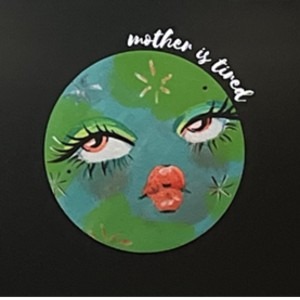
A weary-looking Planet Earth stared at me from the screen of a classroom in Stanford’s Huang Engineering building on a recent Sunday morning. Her face, featuring mascara-lashed eyes and plumped lips, expressed utter exhaustion. Above her, scrawled in loose cursive lettering, read “mother is tired.”
It was visually and emotionally arresting. It was deeply unserious, yet gravely thoughtful. And it was, arguably, more communicative than the years of climate data that inspired it.
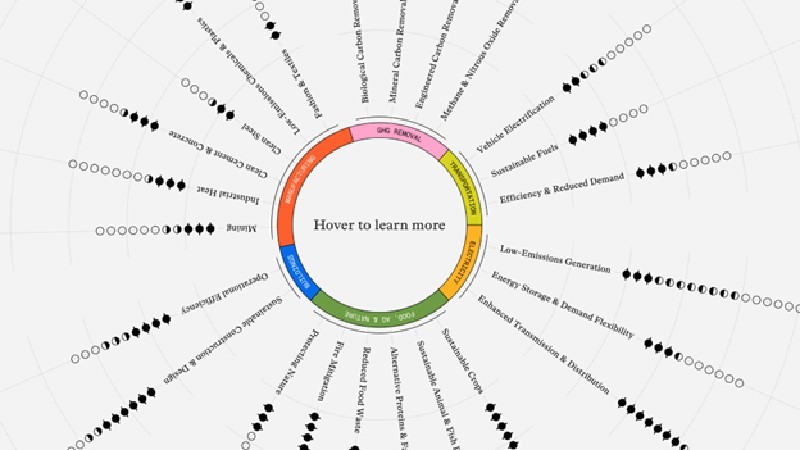
Perhaps that’s the point. Decades of climate data and calls to action have only moved the needle so far. That’s why twenty people, from tech workers to educators to investors, devoted one of their beloved Sunday mornings to trying something new: a two-hour experiment to see if creativity could accomplish what statistics has not – making people care. For ninety minutes, teams of two or three developed a logo, tagline, and merch for a climate sector of their choosing.
“There are a lot of great innovations that are happening today. But many of them are going unnoticed or unsexy,” said Mary Lee, a co-organizer of the Brand the Planet: Design-a-thon event. “It’s like, how do you make it appealing [so] people who may traditionally be opposed to these new innovations say, oh that looks cool, let me look into it.”
Co-hosted by Jonathan Lipman of Speed & Scale, an initiative created by John Doerr to combat the climate crisis, and Aly Hudson, a climate investor at New System Ventures, the format was deliberately “chill and fun,” to encourage people from all backgrounds to engage with something unfamiliar. The best designs from the event would go to a not-for-profit merch store, potentially sold at cost at COP, the UN’s climate conference.
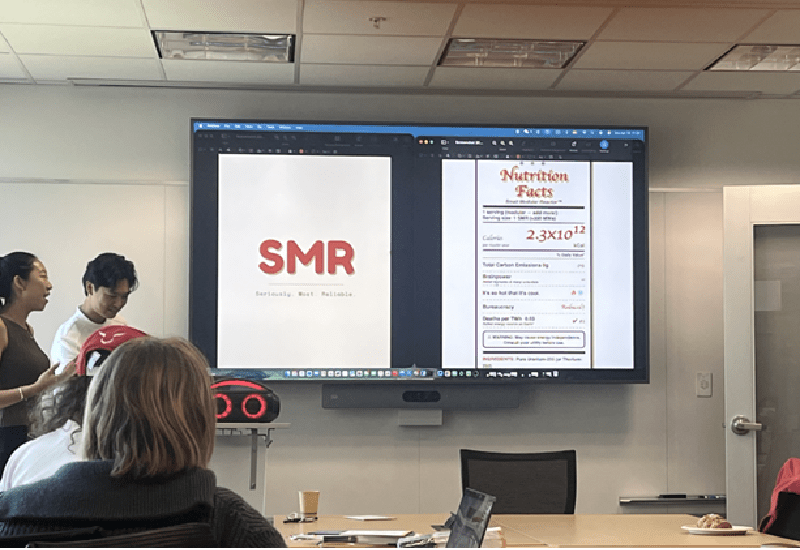
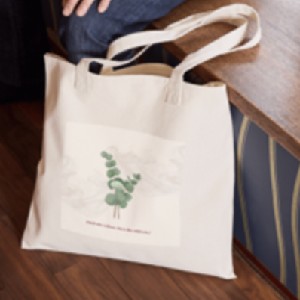
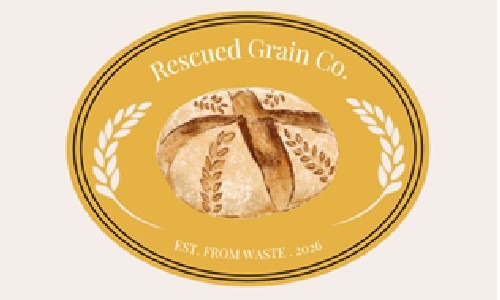
The results were outstanding, especially for a room dominated by non-designers. One team tackled small modular reactors with a brand they dubbed “S.M.R: Seriously. Most. Reliable”. They featured a nutrition label listing “Total Carbon Emissions: 0g” and warned that the product “may cause energy independence.” A second team tackled Food, Ag & Nature, and produced two concepts: a circularity-focused food waste rebrand and a eucalyptus mockup tagged “smells like wellness. burns like california.” Eucalyptus, while a fixture in aromatherapy, also acts as an invasive species outside of its native Australia, and an environmental hazard due to its high flammability and water consumption.
The “mother is tired” team depicted Protecting Nature as both a policy and a personal choice, speaking to the chronically online user through Instagram art and Pinterest board aesthetics. They also presented the brand, “Outfit Repeater,” reclaiming a common social media insult while spotlighting fast fashion’s heavy climate footprint.
Arushi P., a UX researcher who joined the design-a-thon unsure of what to expect, was struck by how accessible it all felt. “I was surprised that it’s not that hard to make fun designs with a serious message,” she said. “I think more people should get into [it]. You get into a creative spirit without having to produce a crazy prototype at the end. I would do it again for sure.”
All submissions shared two things: they were fun, and they were relatable. Participants agreed that those were the two biggest holes in current climate communication. Of course, they also know that it’s going to require more than a rebranding to solve climate change. After all, many of them spend their weeks working on those deeper solutions. But the challenge helped reveal that changing how people feel about climate solutions can be just as important as the solutions themselves.
“Relatability is the biggest thing,” Lee explained. “If you can make people feel connected to the solutions, that’s what will probably make the biggest difference.”
And for Hudson, who spends her days investing in the very climate sectors the teams were branding, the morning confirmed that same gap. “It’s possible to make a pretty depressing topic punchy and fun,” she said. “Bringing some of that cool spunk back into a topic is pretty useful.”
So, while Mother Earth may still be tired, a passionate few are bringing back the spunk – which might, it seems, be exactly what wakes her up.