Ava Cuevas often felt excluded in her high school cafeteria. Not because she sat alone, but because, as her friends filled their trays with slices of pizza and scoops of buttery mashed potatoes, she was left with a decidedly less appealing—and less filling—set of choices. A fruit and a vegetable. Or a lactose-induced stomachache. Always paired with a side of feeling like an afterthought.
Despite being one of the only vegans in her school, Cuevas is part of a growing community. Today, 14% of Gen-Z self-identify as either vegan or vegetarian–nearly triple their parents’ generation. While they may still be a minority in most rooms, at the recent Food4Thought festival at Stanford, Cuevas and other young vegans found themselves surrounded by like-minded friends. They were living, ever-so-briefly, in the future of sustainable food.
Research shows that plant-based diets use less land and water and produce less carbon—making them better for the environment. These diets have also been shown to lower risk of diseases including cancer. Despite the documented benefits, most school lunches still rely on meat and dairy products.
“There was almost never any[thing] for me to eat,” said Dylan Ventura, fellow vegan and UC Berkeley sophomore. “Thinking back on it, I wish I had done something about it. Cause it was something that bothered me.”
School lunch programs’ reliance on animal products comes partially from policy. In California, for example, public schools are required to offer milk with every meal. But requiring milk be served does not mean students will drink it. Chloe Waterman, a Senior Program Manager for Friends of the Earth and panelist at the conference, shared that “[milk] is the most wasted [cafeteria] item by volume, by weight, and by emissions impact.”
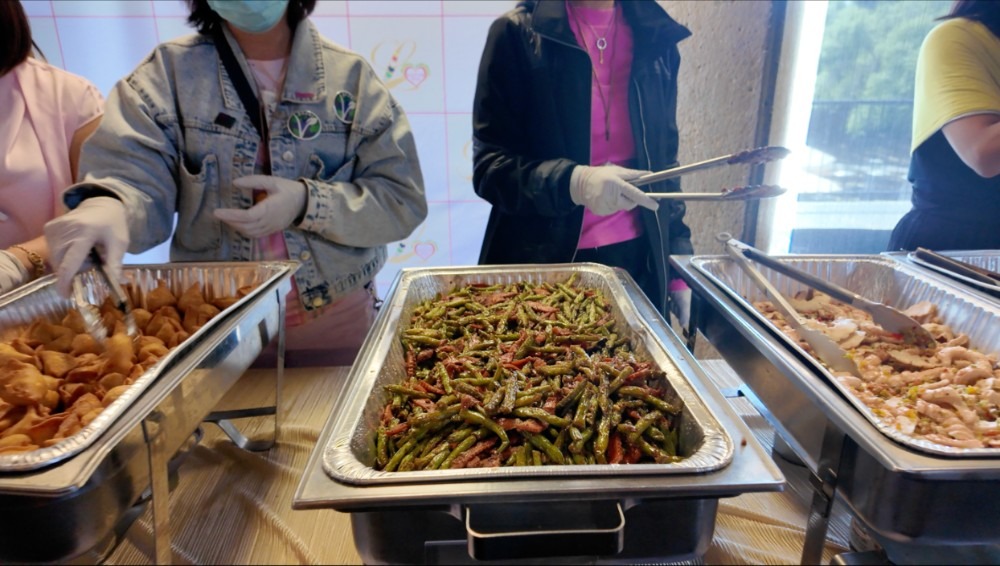
Waterman was one of many leaders at the Food4Thought festival finding ways for food providers to rely less on animal products. The conference led by example—boasting two full days of vegan catering that ensured even meat eaters left feeling satisfied. They provided vegan burritos and steamed buns for breakfast, paired with pad thai and chocolate cake for lunch. They didn’t skimp on the faux animal products either, offering everything from Just-brand “egg” scramble to Daring’s “chicken” satay.
While delicious and nutritious vegan cuisine could feed a few hundred people at a two-day conference, experts recognize that they will need to overcome political, economic, and cultural barriers if they want to see more plant-based options in public schools.
Waterman shared that California is a leader in the field because the state “made historic investments in school meals under the Newsom administration.” The state invested in farm to school, in plant-based options, and in the infrastructure needed for in-house cooking. In 2022, they launched the School Food Best Practices Fund which authorized a hundred million dollars for schools to procure values-aligned foods including California grown foods, plant-based options, and foods to accommodate students with religious or restricted diets.
Even with the state subsidies, cost remained one of the biggest challenges for districts that receive roughly $4.50 per student per meal from the federal government to cover both food and labor costs. Between 2019 and 2023, the percentage of plant-based school lunch options only grew from 7% to 11% in California. The incremental change means that school lunches continue to disappoint California vegans.
It’s a disappointment Ventura remembers all too well. Like Cuevas, he became vegan through animal advocacy and recalls being one of the only vegans in his community. He grew up in a mostly Hispanic city where meat is a big part of the culture. “It was rare that people were accepting and understanding and even rarer that people were supportive,” Ventura said.
Not so at Food4Thought. There students like Cuevas and Ventura lived in a world where food was designed for them and for the planet. They smiled as they shared their best vegan mac and cheese recipes and dreamt of a future world where these recipes became the norm, rather than an afterthought.
In Cuevas’s dream dining hall, everything would be plant-based by default. Of course, students could ask for animal-based proteins, but “for once, I’m not the one that has to be asking for a change.” That dream may still be far from reality, but Cuevas and her peers are helping to build the momentum, dish by dish.