After scrolling past yet another alarming headline about climate change, it’s easy to feel overwhelmed, and it’s just as easy to move on. For climate scientists, though, there is nowhere to move on to. They carry alarming feelings daily, confronting research that forecasts extreme weather, displacement, and ecological loss. So, how do the world’s twenty-thousand climate scientists continue their doomsday work?
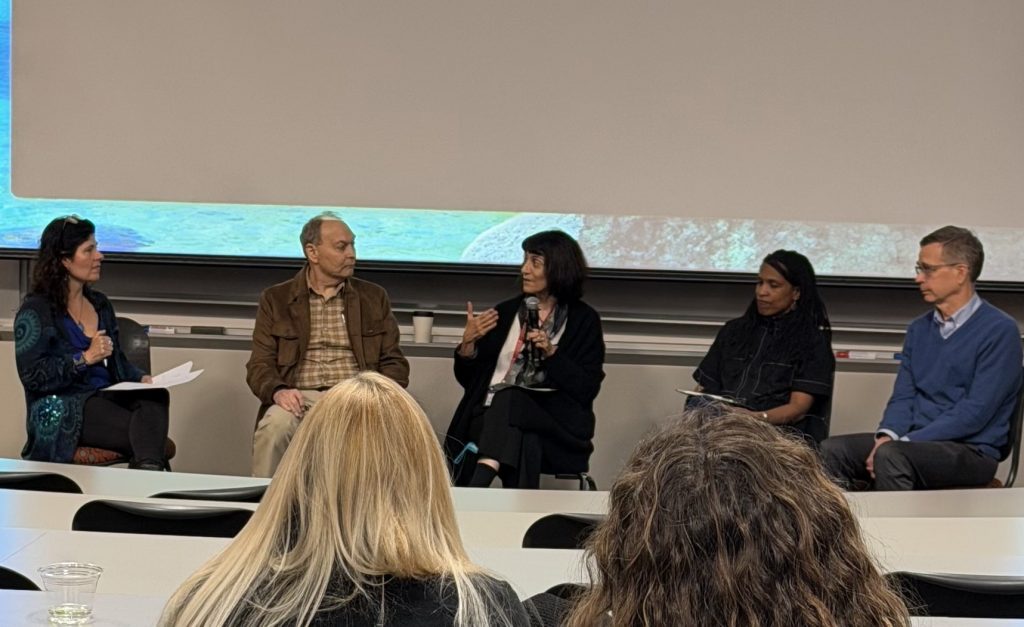
This question is fundamental to the new documentary film Climate in Therapy. And it was prominent in a recent post-screening panel discussion featuring Stanford faculty, grappling with the challenge of the emotional weight of their work.
Climate scientists carry the same sense of loss, fear, and uncertainty that many people feel when reading the news. And with the severity of climate related issues increasing, it is more crucial now than ever for members of the field to care for their own mental wellbeing. Perhaps seeing leaders of the field attempt to do so on screen and in person is a necessary first step.
Seven renowned climate scientists attempt to take that step in the film, attending group therapy sessions together in an attempt to unpack their emotions. The sessions are at once jarring, awkward, and inspiring. “I’m trying my damnedest to not lose hope,” one scientist exclaims. “Okay enough. It is just too much,” says another when describing her emotions.
Throughout the film, viewers can see the hesitancy the scientists face in unpacking their deep and buried emotions. This is exactly why award-winning director Nathan Grossman created the film. Posing a question to the audience, he asks, “What are the consequences if we have a world where these emotions are pushed away?”
Following the film’s screening, Stanford faculty members addressed that question, and the challenges of mental health and climate research. Steve Luby, director of the Center for Human and Planetary Health, emphasized that “we need to come together as a community” and bring more scientists into the conversation. This event was a step towards that.
An event attendee, who had driven over an hour to attend, wished “more people could take the day off of work to attend [this event] and reflect on their own well-being.” With already packed schedules, researchers feel overwhelmed with their workloads, making these discussions especially challenging.
When asked what gives him hope amidst a changing climate, Craig Forte, a psychiatry professor, responded, “this. This session gives me hope.” In an uncertain world, climate scientists especially need the space to process the emotional weight of their work. At the end of the day, as one of the film’s climate scientists states, “scientists are people too.” And for all of us, that means finding ways to stay healthy ourselves, as we work to heal the planet, too.