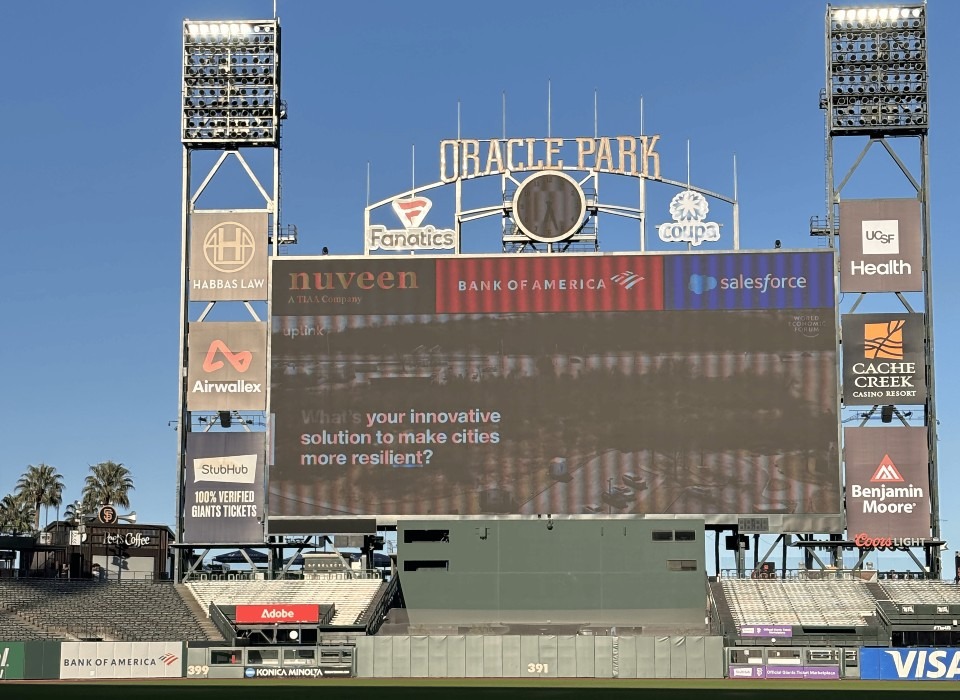
On a clear April evening at Oracle Park, the crack of a bat was replaced by the hum of conversation about…not baseball, but carbon. San Francisco Climate Week 2026 kicked off not in a conference room but in one of the city’s most beloved gathering places, home to the MLB Giants, and the choice was anything but accidental.
The evening’s centerpiece was the formal launch of San Francisco’s updated Climate Action Plan (CAP), a sweeping blueprint that aims to cut emissions, accelerate clean technology deployment, and for the first time bring private sector partners inside the tent of city policymaking. Mayor Daniel Lurie, who unveiled the plan, pointed to over 250 EV chargers now deployed across the city and noted that SF Climate Week draws more than 60,000 participants and 70 businesses annually. “This event is a key example of how climate innovation and partnership can come together,” he said.
Larry Baer, the San Francisco Giants executive who helped open the event, pointed out that the park holds LEED certification as a sustainable facility and that roughly half of all game attendees arrive by public transit. Oracle Park, he was suggesting, is not just a sports venue. It is already a working model of exactly the kind of climate innovation and partnership the mayor had in mind.
Valeria Ortiz, who attended the kickoff with the World Economic Forum, said the event reflected something she rarely sees. “All these different parts of a city, public, private, civil society, come together around climate,” she said.
That convergence has a structural explanation. San Francisco has updated its CAP several times since 2004, but the 2026 version marks a real shift with a first-of-its-kind innovation chapter shaped by Yes/SF, a public-private initiative that connects companies with deployment opportunities inside city government. Jason Girzadas, CEO of consulting giant Deloitte, pointed to early signs it is working: more than 50 innovators at the week’s events, over half already with projects deployed in the city. “Businesses can come together to face the big challenges of our city,” he said. The companies on the field of Oracle Park that evening were proof of concept.
Take the regional waste-management company Recology, at a booth just off the main stage. Julia Mangin and Siena Hooper were running a waste-sorting game, walking attendees through the journey of a plastic wrapper to recycling facility. Recology operates composting and recycling facilities rather than landfills, and their artist-in-residency program reflects a belief that sustainability has to become culturally intuitive before it becomes habitual. “Waste is something that every person on this planet produces,” Mangin said. “I really do think that waste is one of the few places where individual action can make a real difference.”
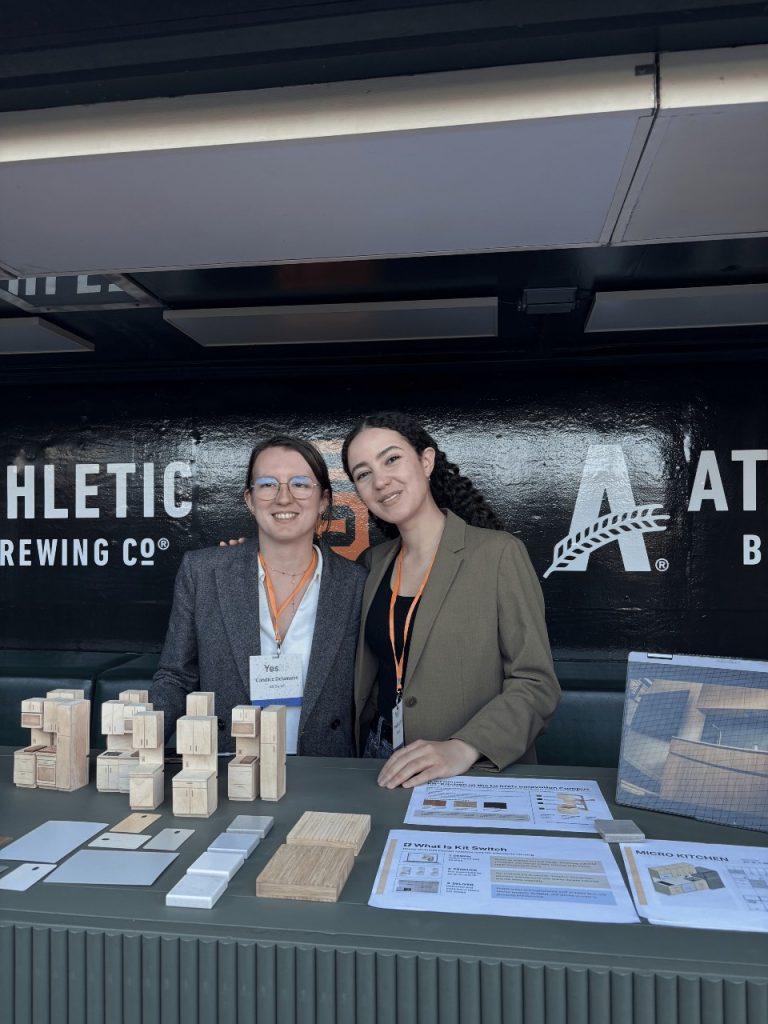
A few booths over, Armelle Coutant from KitSwitch described a 50-unit housing project just completed in Richmond, California. KitSwitch manufactures modular kitchen units that install three to five times faster than conventional construction. After a year inside the Yes/SF cohort, Coutant said the kickoff felt like a full-circle moment. The innovation chapter in the CAP is designed to create more of these opportunities for startups throughout the city.
Whether San Francisco can sustain that momentum is the harder question. The city’s climate record includes both major successes and notable setbacks. CleanPowerSF delivered 100% renewable electricity to all customers in 2023, two years ahead of schedule. But the city’s ambitious zero-waste goal, adopted in 2003 with the aim of sending nothing to landfill by 2020, was quietly scaled back in 2018 to targets focused instead on reducing overall waste generation and cutting landfill disposal by 50% by 2030.
Even so, organizers and business leaders argued this moment feels different because the city is building stronger pathways between policy and implementation. “This time can be different if we treat the CAP as a working document and keep organizing around the goalposts it sets,” said Jenny Feinberg of the SF Chamber of Commerce. She pointed to Yes/SF as a key part of that effort, connecting innovators to the city’s real implementation needs while maintaining the relationships and coordination needed to move climate solutions from pilot stage to practice.
Meanwhile, back on stage, former Giants outfielder Hunter Pence brought the evening into focus in a way no policy chapter could. He spoke about showing up for work that outlasts any career. He and Rodney Fong, President of the SF Chamber of Commerce, had already been out planting trees with the gathered CEOs. “Plant trees you’ll never see grow,” he said. In a room full of action plans and innovation chapters, it was the line that really took root.