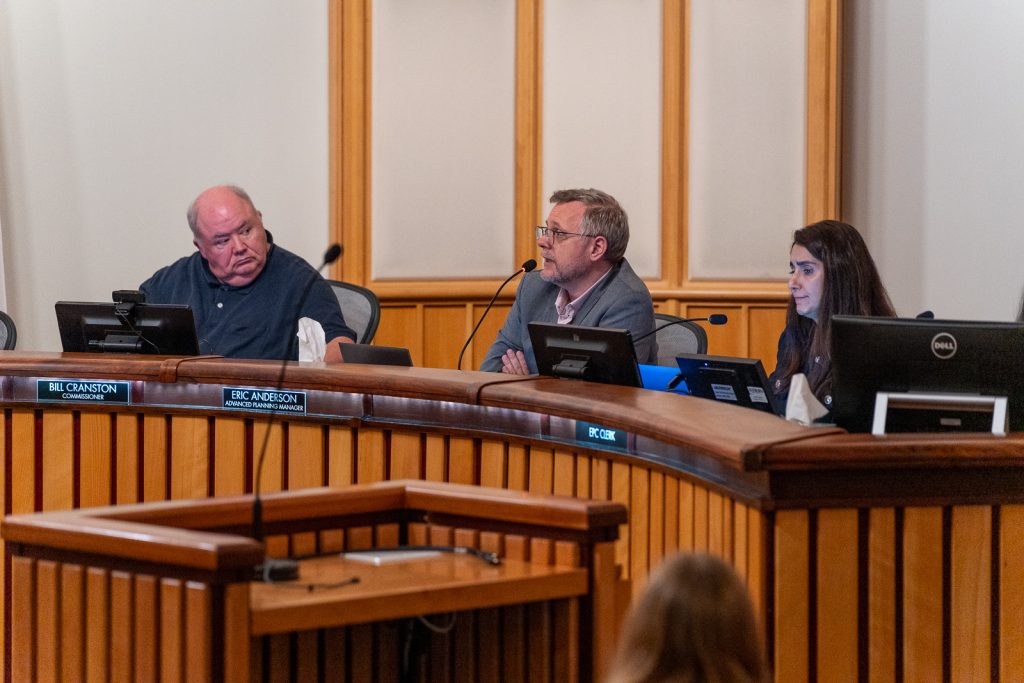
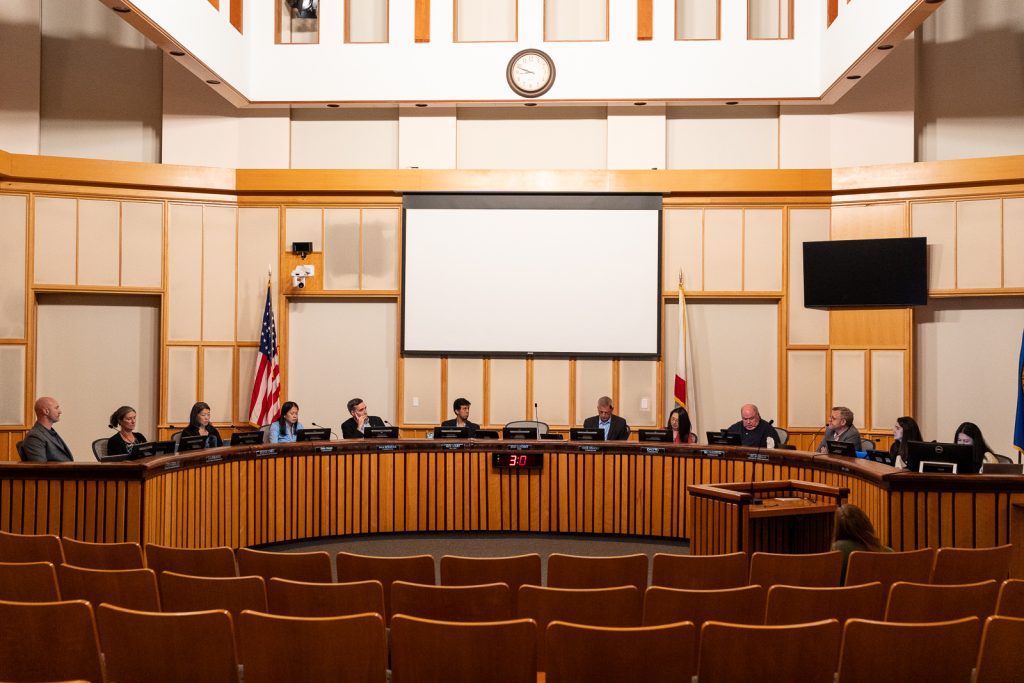
MOUNTAIN VIEW — Despite property owners’ concerns, the Mountain View Environmental Planning Commission supported a staff recommendation to add 63 new properties to the city’s Register of Historic Resources during a review meeting on Oct. 1.
The meeting was one of several check-ins between city staff and the commission during the course of the Historic Preservation and Register Update project, which has been underway since 2022 and is on track to be approved by the city council in 2026. The project aims to add protections for historic buildings and properties, along with tax-reducing incentives to assist owners in maintaining historically designated properties.
But not everyone wants to be designated.
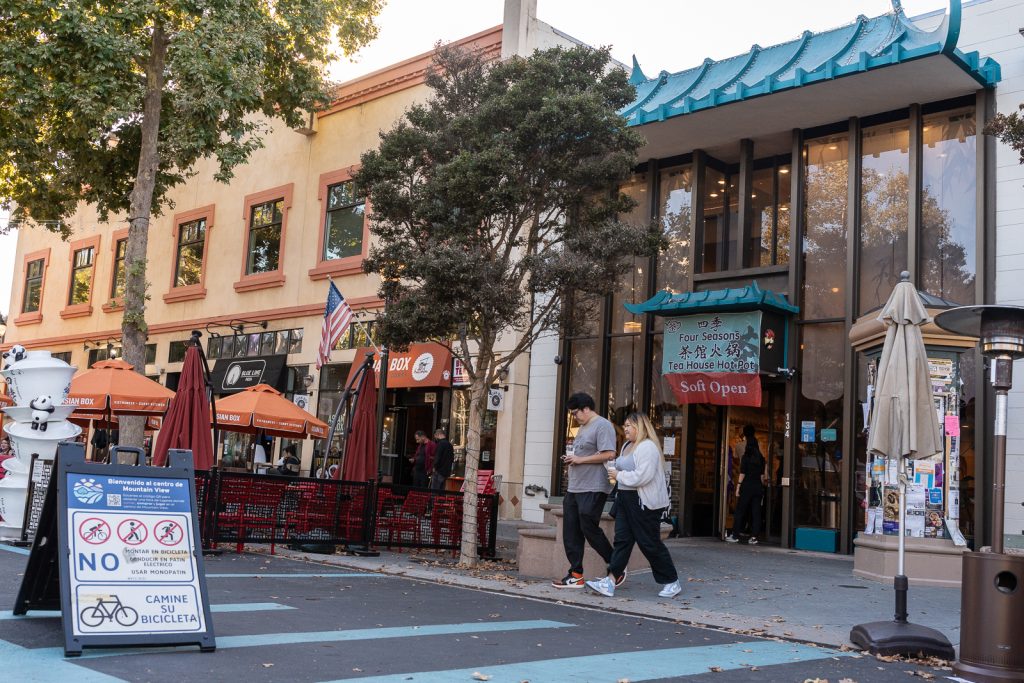
In a letter to the commission, Donna Ha and several other owners requested the city decline to designate their property at 134 Castro Street, a 1960s building with replica Chinese roofing that currently houses a Chinese hot pot restaurant, as a historic resource.
“Historic designation would place unnecessary restrictions on the property. It would reduce the property’s value, limit opportunities for future tenants and obstruct future renovations while providing no significant public benefit,” the owners wrote.
The owners also expressed confusion as to the building’s nomination. “[The building] has never experienced any historical event. It has no association with notable figures, nor does it hold significant ties to Mountain View’s Chinese-owned business community. The building’s material is standard and overall craftsmanship is basic…In fact, a few years ago, renowned Chinese designer Liang Zhiming reviewed the property on-site and gave it a negative design assessment,” the letter said.
The owners of 134 Castro Street were not the only stakeholders to express concerns. Kenneth Tsukahara commented on behalf of the Mountain View Buddhist Temple that the temple was not interested in being on the register and was concerned about the lack of “opt-off” options.
Opt-off and incentives
The temple’s concerns are rooted in the staff recommendation to remove a frequently used “opt-off” provision of the current historic preservation ordinance. Eric Anderson, advanced planning manager for the city of Mountain View, explained in a follow-up interview that the original ordinance allowed property owners to easily opt off immediately after being nominated to the list. At least half chose to do so.
“ We are recommending that we remove the ‘opt-off’ provision completely so that all the properties that are eligible, that have opted-off, would go onto the register,” Anderson said, adding that all the newly nominated properties would also go onto the register without the ability to opt-off.
During the review meeting, Commissioner Hank Dempsey raised concern about removing the opt-off provision. “If there’s so many people that want to opt off that we have to prohibit it, that means the incentives are out of alignment. And that’s what concerns me,” Dempsey said. “ It shouldn’t be a drag to end up having your building named historic or being put on a historic list.”
The commissioners ultimately supported the staff’s recommendation to remove the opt-off provision but reiterated the importance of increasing incentives, which are currently in the form of tax relief available through property tax rebates.
Property-owner concerns
In August, Mountain View Buddhist Temple board members learned through a letter that the temple had been placed on a list of potential properties for the register. Board President Julie Satake Ryu said in an interview that the tax incentives offered are irrelevant for nonprofits like the temple.
“ We’re a 501c3 organization… All our inclusion does is devalue our property,” Satake Ryu explained. “[The tax incentive] makes absolutely no difference…It will be crushing.”
The first structure at the Mountain View Buddhist Temple went up in the 1950s, according to Satake Ryu. But since then, many of those original buildings have been torn down and replaced with newer ones. Over the years, the temple has served as a crucial gathering space and spiritual center for the Japanese-American immigrant community. The temple also offers a variety of activities for the public and hosts annual community events like the Obon festival, which attracts hundreds to the temple’s grounds.
Satake Ryu worries that being on the city’s register of historic resources will make it challenging to make any changes to the property, limiting the temple’s ability to serve the community the way they need to in the future.
“ We’re in the middle of making some potential changes and I am very concerned that this whole process is going to just make it more expensive. There’s no compensation for that,” Satake Ryu said. “ We’re a religious organization. We would like to continue. We would like to serve our community. This appears to be a threat to doing that if we can’t, say, build new classrooms because it’s historic. If we can’t change our main worship area, because we don’t have the materials that match the original design. So they are just causing restrictions for us, without any concern for us as an organization within the city.”
Anderson said in a follow-up email that city staff are currently exploring incentives other than tax-based that may appeal to nonprofits, but cannot offer more insight on the subject until they do further research.
The city council will weigh in on staff recommendations next month before officially approving the updates sometime next year. Staff will accept comments until Dec. 1 on historic designations– comments can be emailed to Eric Anderson, advanced planning manager, or Elaheh Kerachian, senior planner at the City of Mountain View.